Study highlights wide use of antibiotics in children with Crohn's disease complications

Antibiotics are commonly prescribed to children and adolescents with Crohn's disease who develop perianal fistulizing complications (PFCs), despite limited evidence supporting their long-term benefit, according to a new study published in The Journal of Pediatrics.
A research team led by CHEAR investigators Jeremy Adler, MD, MSc, and Samir Gadepalli, MD, MS, MBA, analyzed health insurance claims from more than 5,200 patients under age 21 diagnosed with Crohn's disease between 2009 and 2018 and followed for five years. The study, part of the SETON (Standardization of Evaluation to Treatment of Pediatric Perianal Crohn's Disease and Improving Outcomes through Networking) initiative, is the first to examine antibiotic stewardship for these complications.
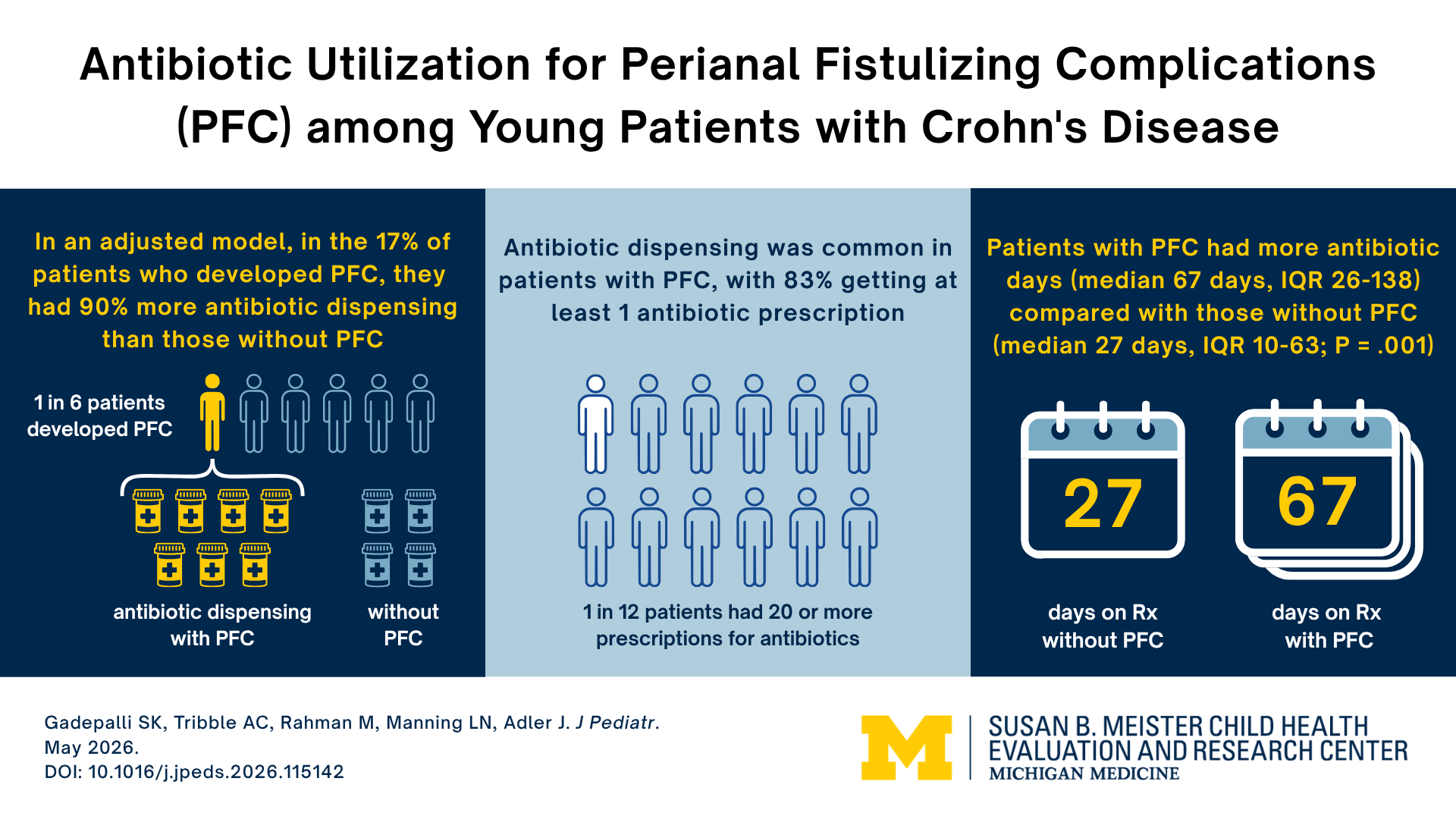
The study found that antibiotic use was widespread: 83% of patients received at least one antibiotic prescription during the study period. Among patients who developed PFCs (17% of the cohort), antibiotic exposure was substantially higher. These patients received a median of 67 days of antibiotics compared with 27 days among those without PFCs. After adjusting for disease severity, medications, surgeries, and other factors, children with PFCs had 90% more antibiotic exposure than those without these complications.
Notably, the study found that antibiotic use was highly variable, with approximately 1 in 12 patients receiving more than 20 antibiotic prescriptions during the four-year follow-up period. Because claims data could not determine why individual antibiotics were prescribed, the researchers emphasized the need for more patient-centered research to improve clinical guidance and standardized treatment approaches.
Perianal fistulas and abscesses are among the most challenging complications of Crohn's disease, often causing severe pain, drainage, repeated surgeries, and frequent healthcare visits. While antibiotics are recommended as an initial treatment to relieve symptoms, evidence that they promote healing is limited, and prolonged use may increase the risk of antibiotic resistance, Clostridioides difficile infection, and disruptions to the gut microbiome.
“These findings demonstrate the urgent need for evidence-based strategies to guide antibiotic use in children with Crohn’s disease and perianal complications,” the authors concluded.